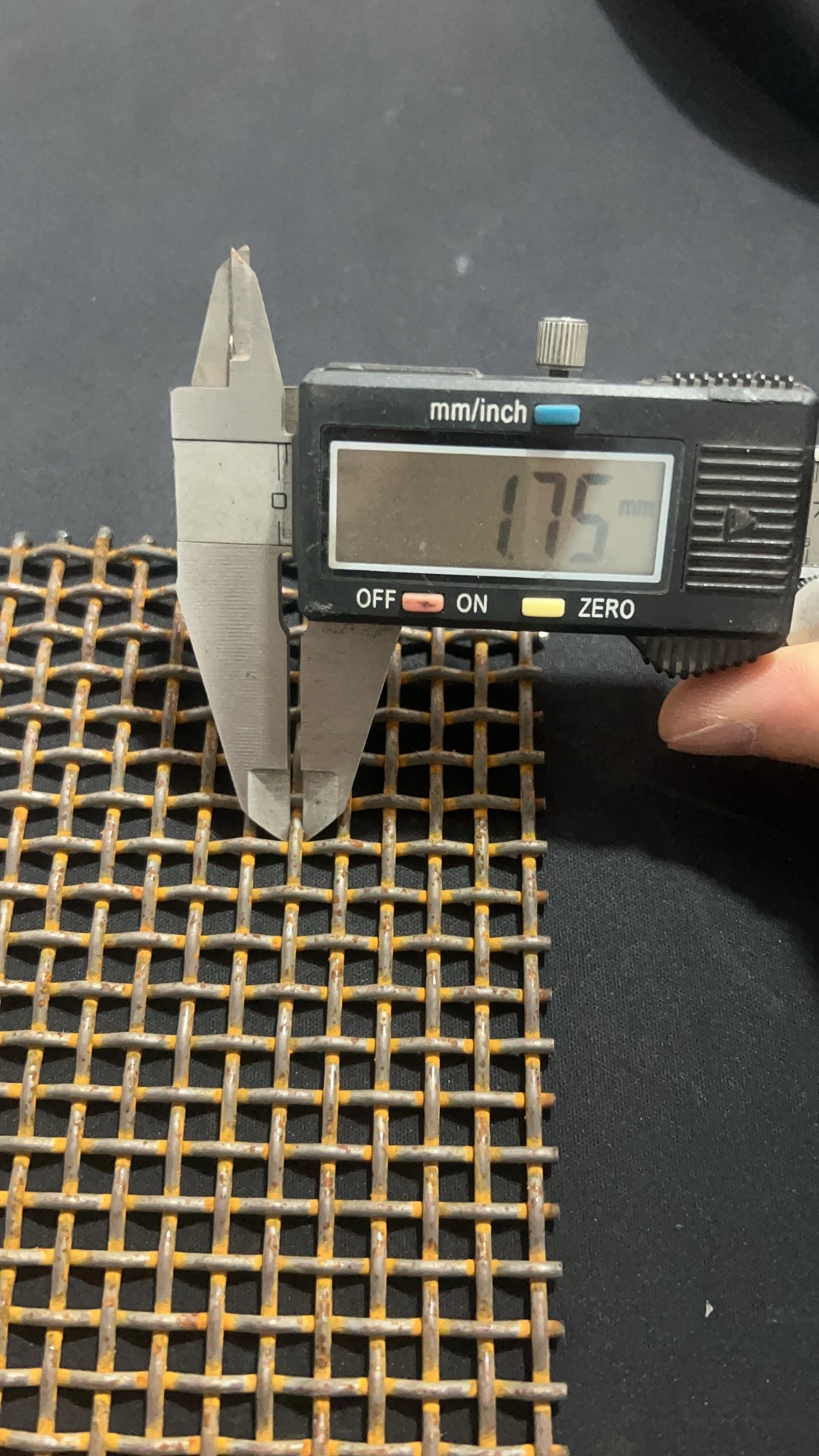
A replacement screen is not a catalogue item. Two screens with the same aperture can still fail in different ways: one will not sit flat on the deck, another will not hook correctly, and a third will pass the wrong cut size because the wire diameter changed the open area.
The good news is that the information needed to avoid this is small. In practice, eight parameters decide the outcome.
The eight parameters
- Material — 65Mn spring steel, stainless steel or carbon steel. If you do not know what the current screen is, that is a usable answer too: it starts a discussion rather than stopping one.
- Wire diameter — measured in millimetres. Available range is 0.4–20 mm.
- Aperture — the opening size, 0.6–200 mm. This is the parameter that most directly controls your cut size.
- Width × length — the panel size, measured from the screen you are replacing.
- Opening type — square, rectangular or diamond.
- Hook / edge configuration — hook depth, edge type and the fixing method used on your deck.
- Quantity — including whether you order single panels or full deck sets.
- Equipment and application — the type of vibrating screen and the material being screened.
Why each one is confirmed rather than assumed
Dimensions and hook configuration decide whether installation is a fitting job or a re-work job. Aperture and wire diameter together decide classification. Material choice decides how the screen behaves in the working condition — abrasive stone, wet or corrosive conditions, or general screening.
Because these interact, we confirm the specification with you in writing before production. No confirmation, no production: that is the point at which an avoidable purchasing risk is removed, rather than discovered on arrival.
What to send if you do not have all eight
Partial information is enough to start, and the most common starting points are:
- A drawing of the screen, with dimensions marked.
- A sample — the old screen itself, or a section cut from it.
- The existing specification, in any format you already have it: a purchase record, a photo of a spec sheet, or plain text in an email.
If you have none of these, a set of photos of the screen still installed, with a tape measure in frame, is a practical substitute. It is normal for the first reply to contain clarifying questions — that is the review working as intended.
What happens next
After the parameters are reviewed, you receive either a quotation for a confirmed specification or the specific questions needed to complete it. From there, samples and trial orders are available if you want to evaluate fit and performance before a bulk commitment, and the confirmed specification is kept so that reorders and repeat replacement supply run against the same record.
Screens are wear parts. The specification you confirm once is what makes the second and third order simple.