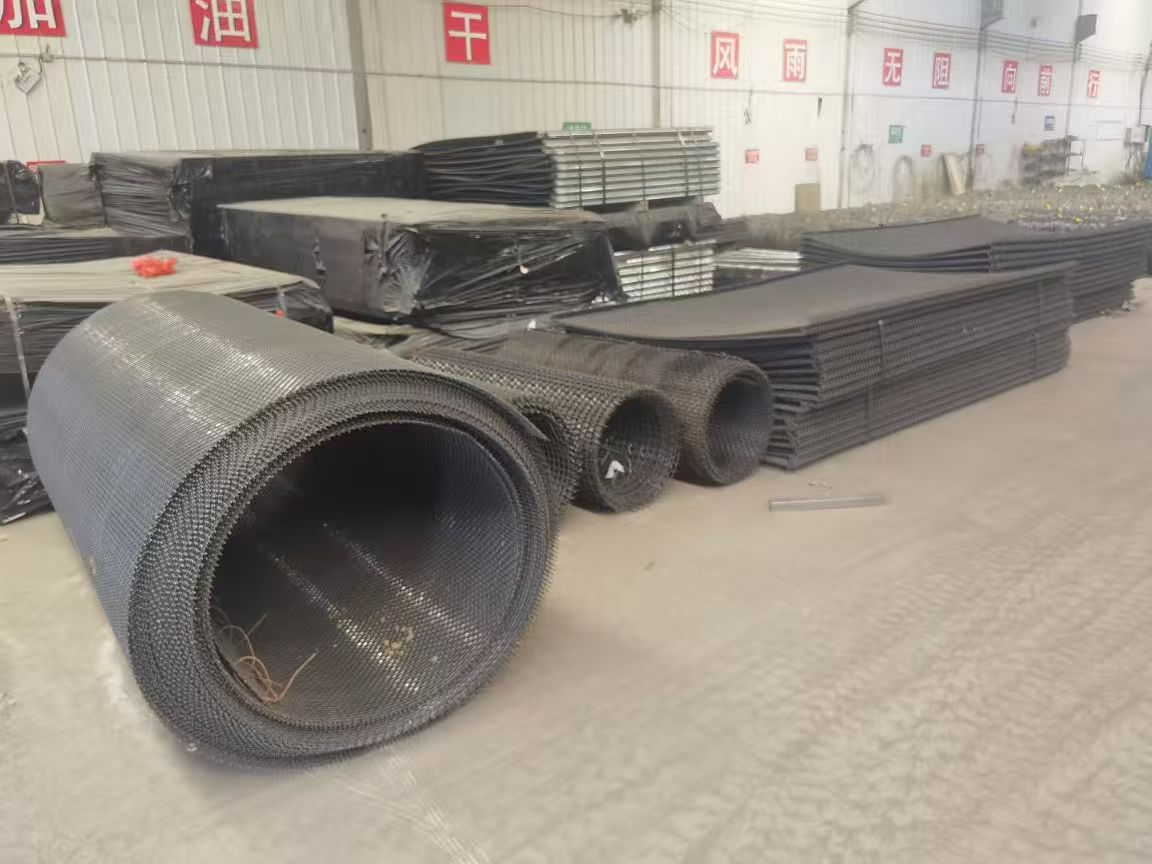
The weave, the aperture and the wire diameter are the same whether a screen leaves the factory as a finished panel or as a roll. What changes is where the finishing work happens — and that is a commercial decision as much as a technical one.
When finished panels make sense
Panels are the direct route when the screen goes straight onto a machine. The panel arrives cut to size with the edge configuration already processed, so replacement is an installation job.
This is usually the right choice when:
- You are replacing screens on your own plant and downtime is the main cost.
- The hook and edge configuration has to match what is already on the deck.
- You want the dimensions and the edge treated as one specification, rather than assembling them from two suppliers.
When rolls make sense
Rolls are supplied to your confirmed weave, aperture and wire diameter, and the cutting and edging stay under your control.
That is usually the better fit when:
- You cut and edge screens in your own workshop and do not want to pay for work you already do.
- You hold a stock of screening material and finish screens against incoming orders.
- You supply more than one panel size from the same weave, and would rather cut per order than hold finished stock of each size.
For distributors and screening media suppliers, rolls are often the form that keeps inventory flexible.
What has to be confirmed either way
The supply form does not change the specification work. Whichever form you order, these are confirmed before production:
- Material — 65Mn spring steel, stainless steel or carbon steel, discussed against the working condition.
- Wire diameter and aperture, which together determine the opening and the classification behaviour.
- Dimensions — panel width and length, or the roll width you want to cut from.
- Opening type — square, rectangular or diamond.
- Edge configuration, if the screen is to be supplied hooked or edged.
A practical way to decide
Ask which of the two costs you would rather carry: the finishing work, or the inventory of finished sizes. If your workshop already cuts and edges screens, a roll keeps the value of that work inside your operation. If the screens go straight onto a deck and downtime is what hurts, a finished panel removes a step from the change-out.
Both forms are produced from the same confirmed specification, and both can be run again as repeat supply when the screens wear out.